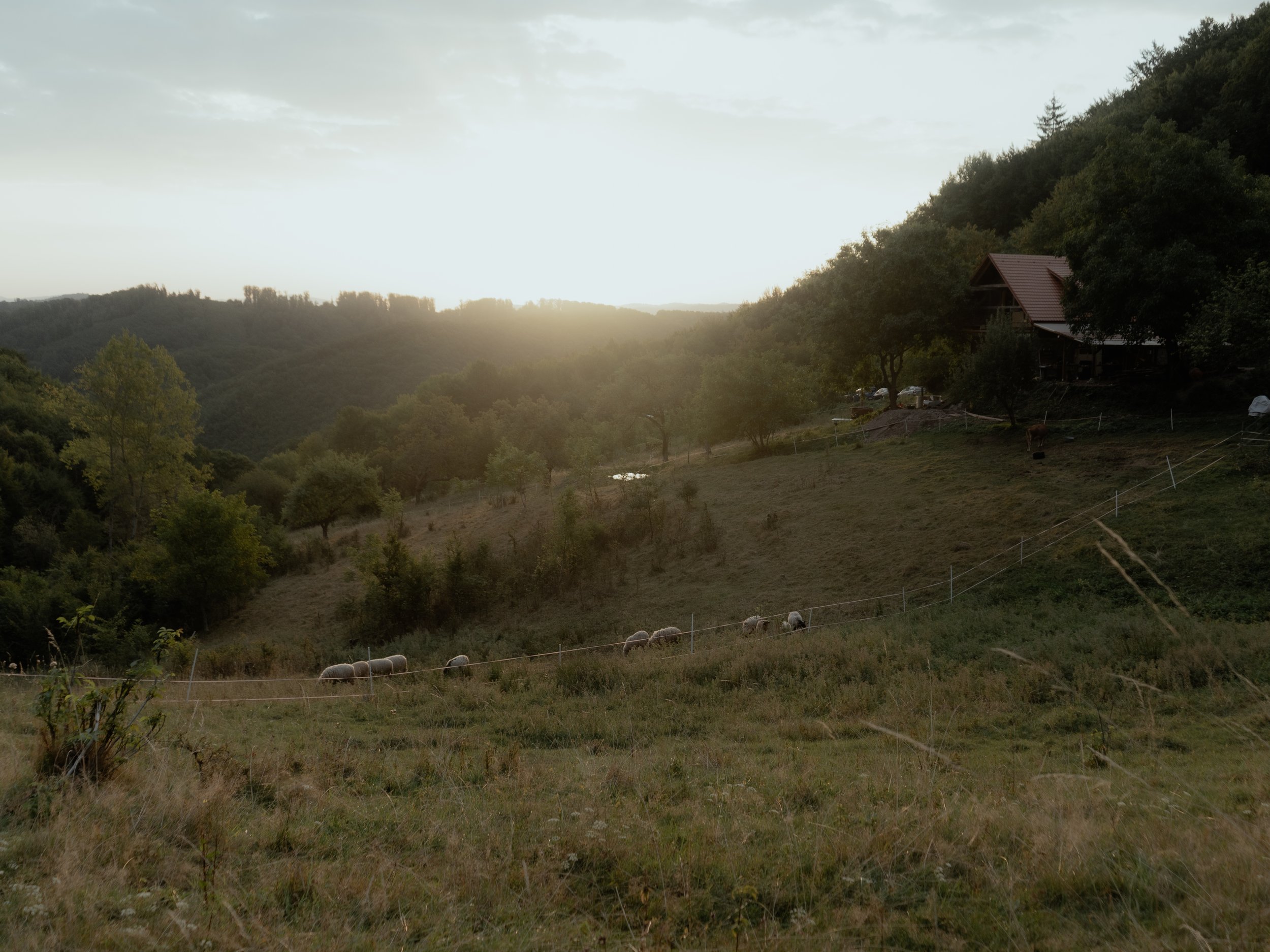
Dolinka
“Poďme, poďme, ideme!”
Loud whistles. Bells. The rooster lets out a rusty kikirik-kikííí. Stomping feet, heavy and light. The attic is dim and cold. My second blanket slipped to the floor during the night. I am cold. It is not yet seven. Light seeps through the opening where a door should be, but instead is only a gaping door frame with narrow, ladder-like stairs leading down to the yard. Across the room, on a raised platform of pallets with a mattress laid on top, lies a tangle of blankets. Somewhere beneath them, my brother sleeps. A swallow cuts through the barn, shoots out through the opening, and disappears into the day.
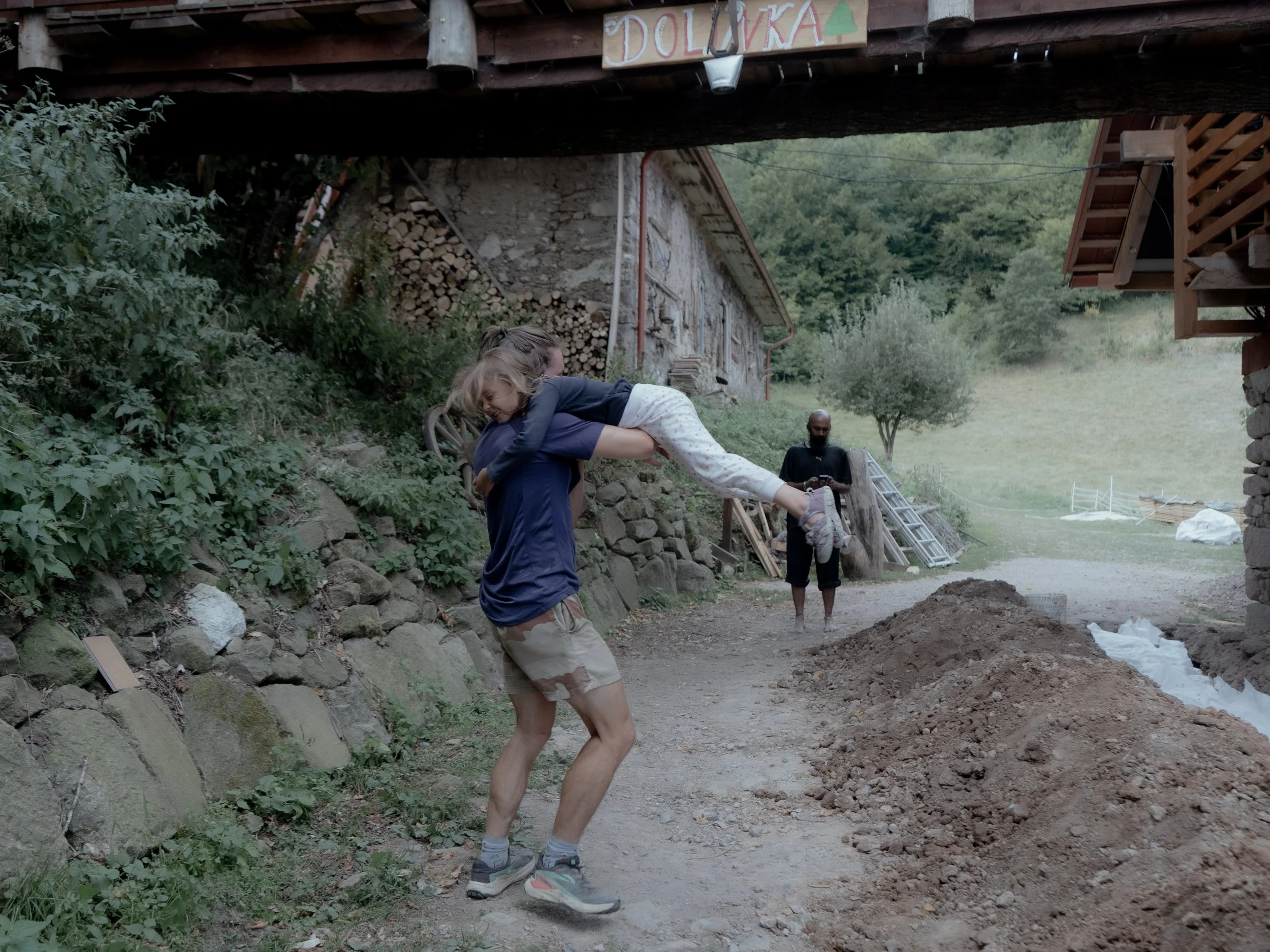
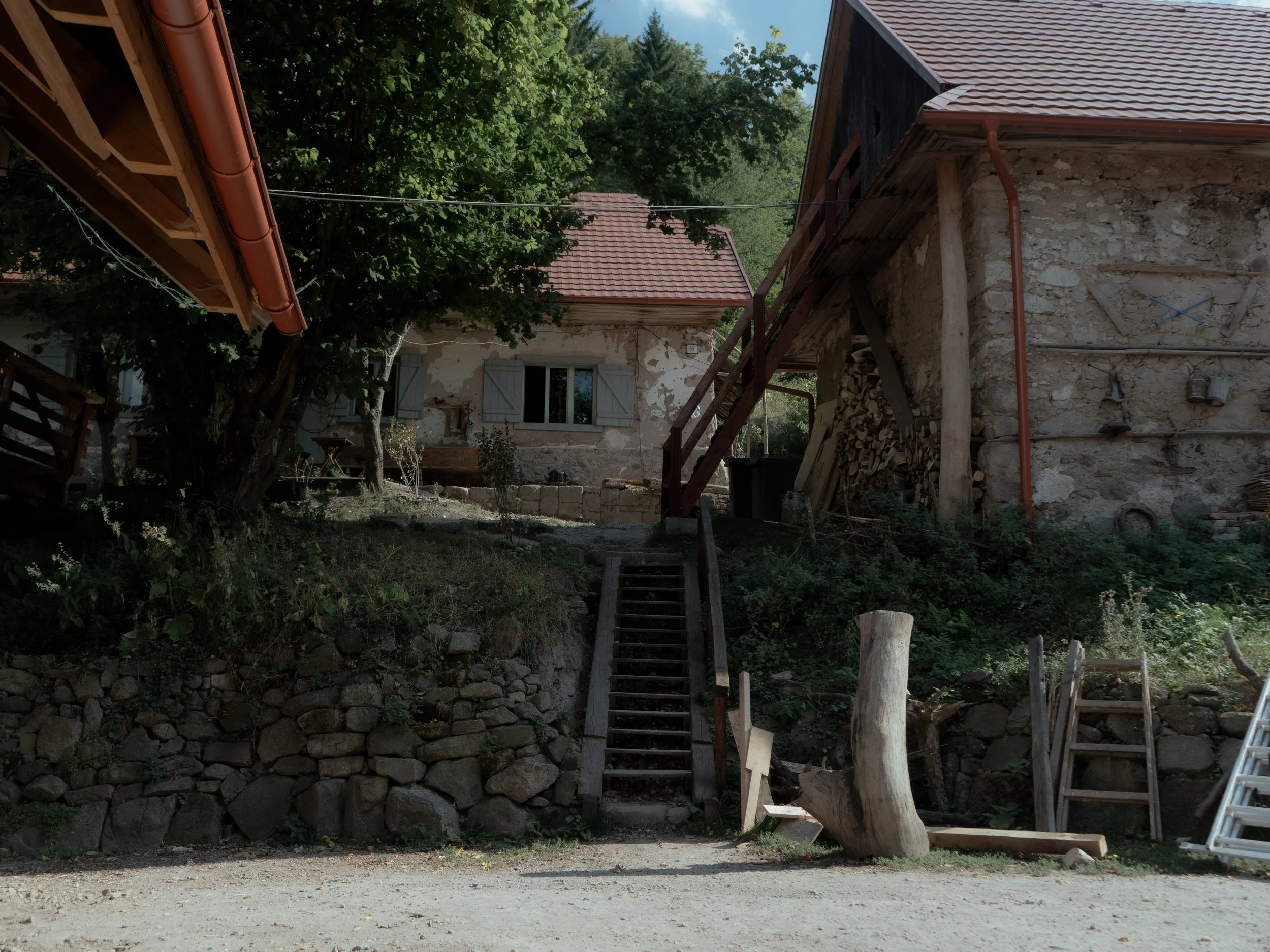
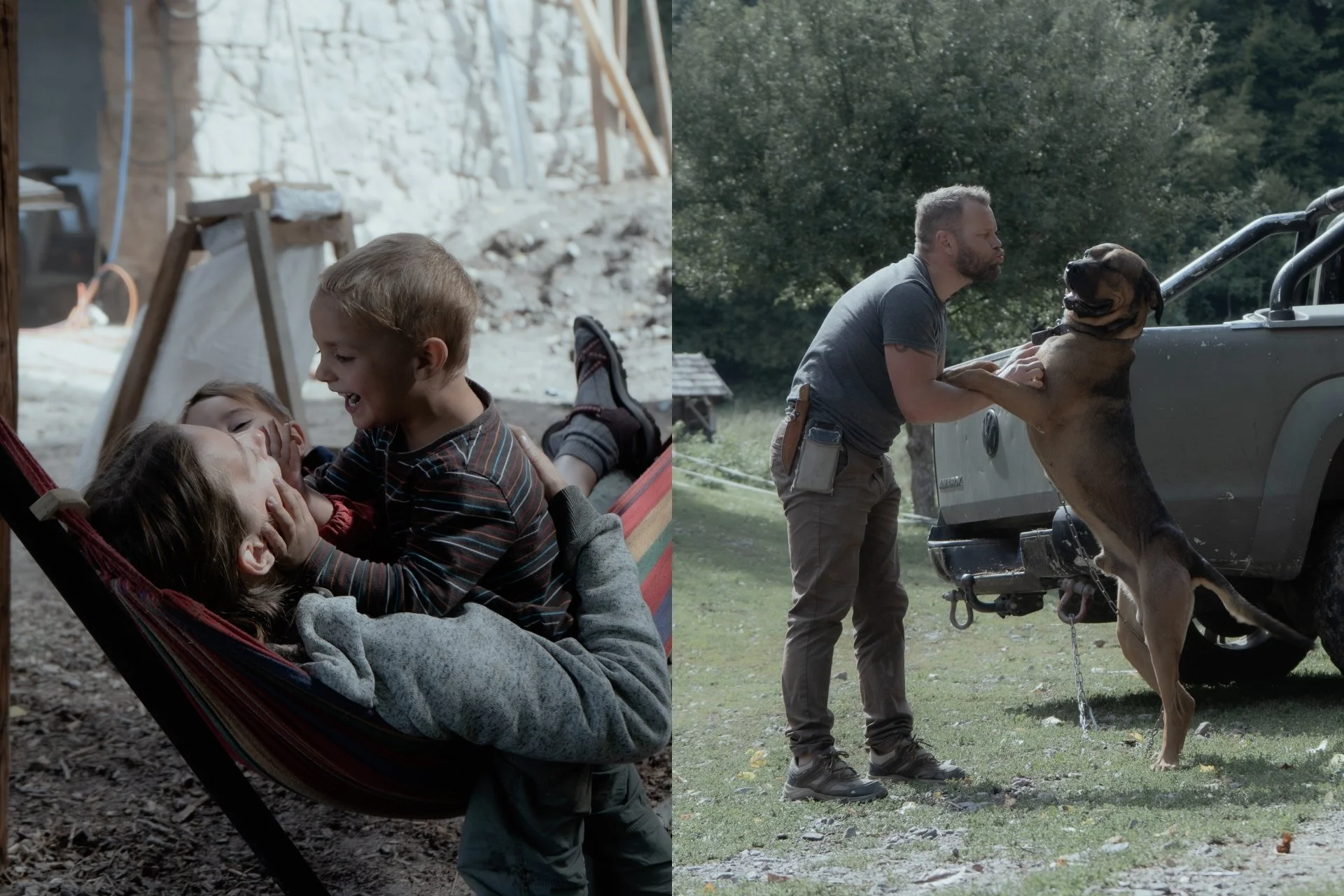
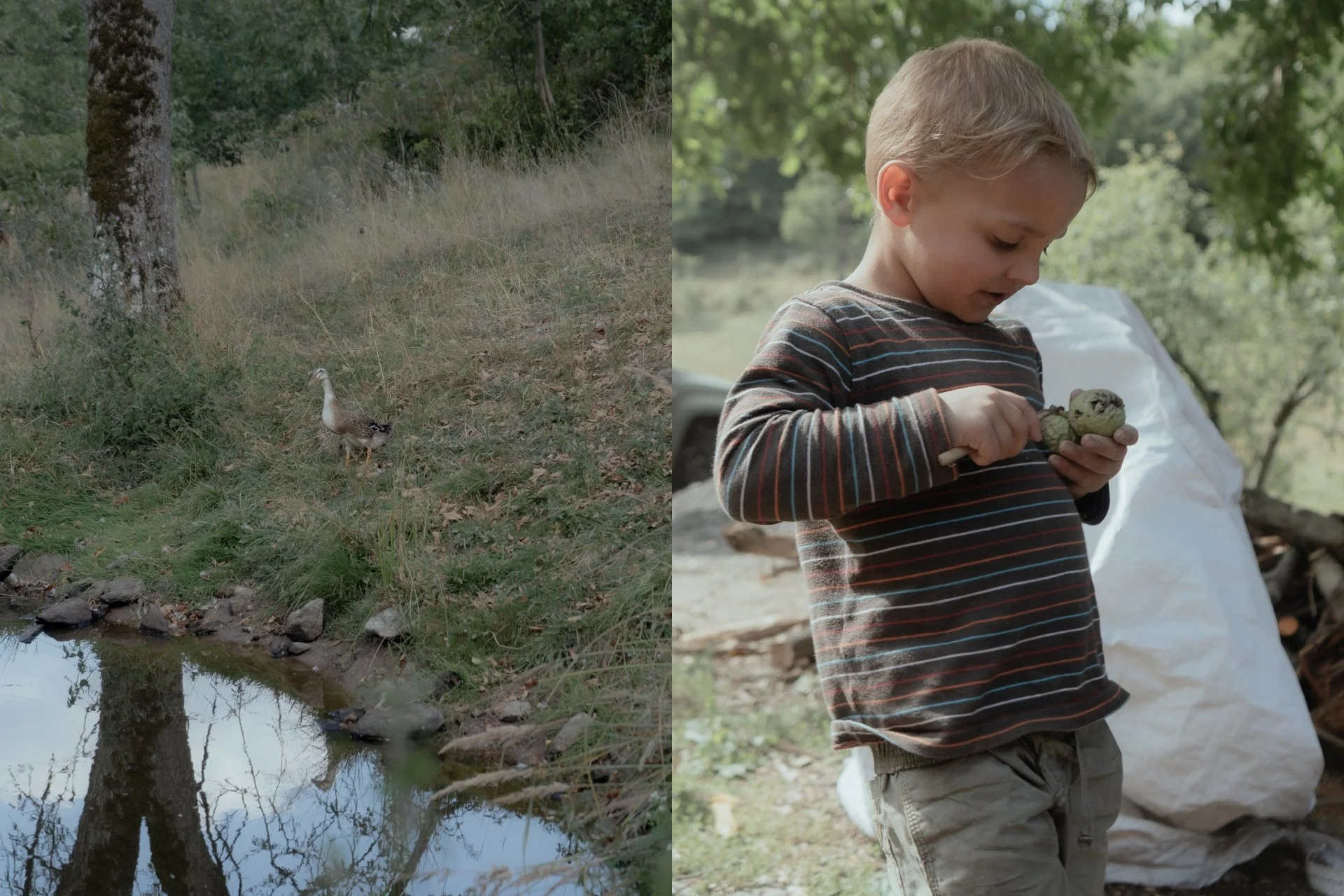
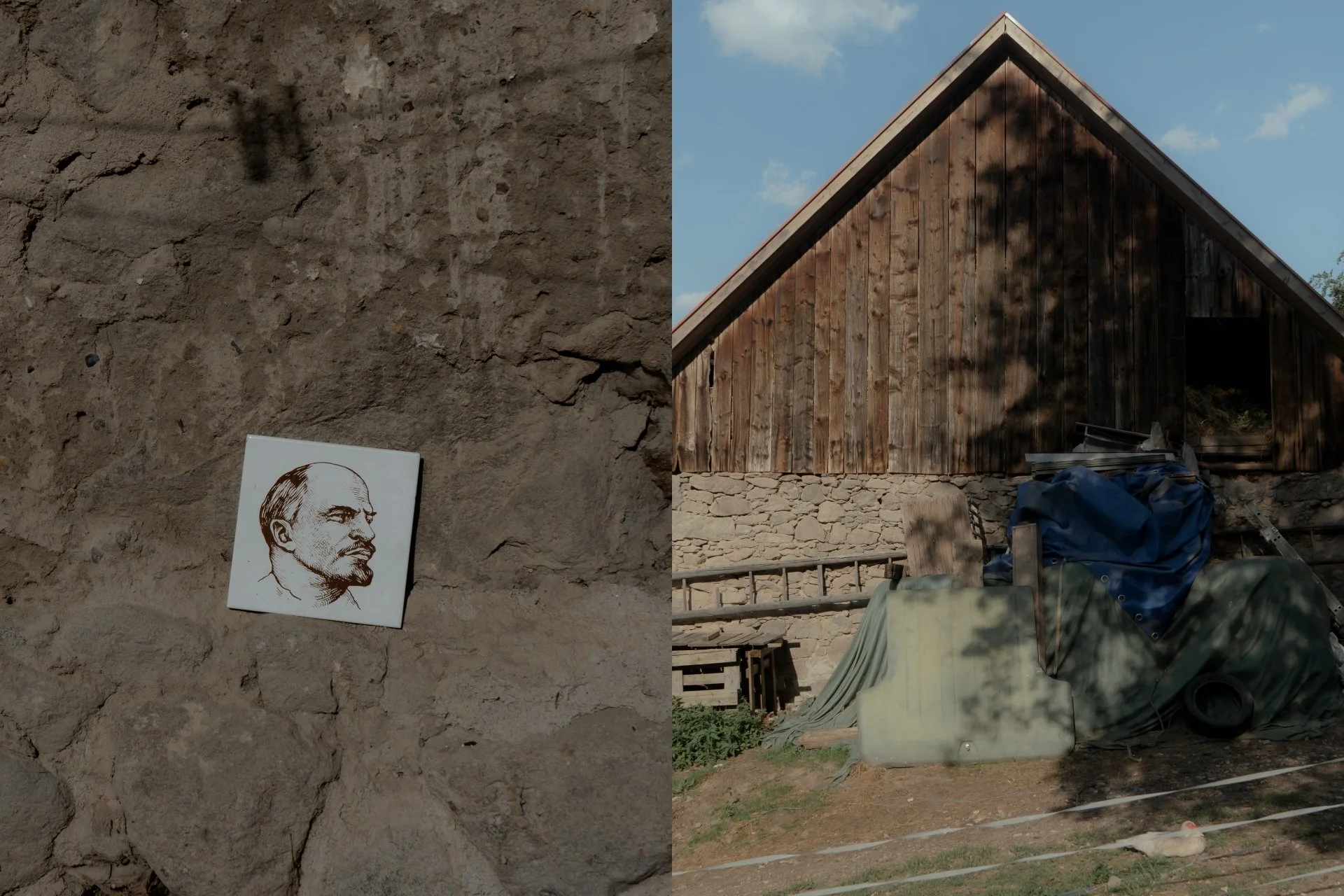
This work comes from two weeks spent volunteering on an off-grid eco-farm in central Slovakia. The farm is called Dolinka, named after the first cow, still alive. Not there are two - Dolinka and her calf. Matej, the farmer, bought the land in 2020 after years of volunteering on farms across Spain. Three buildings shape the place: the guesthouse, the barn, and his living house. Each rests on old stone foundations, built up over time with his own additions of tiled roofs, plastic windows, showers, lamps.
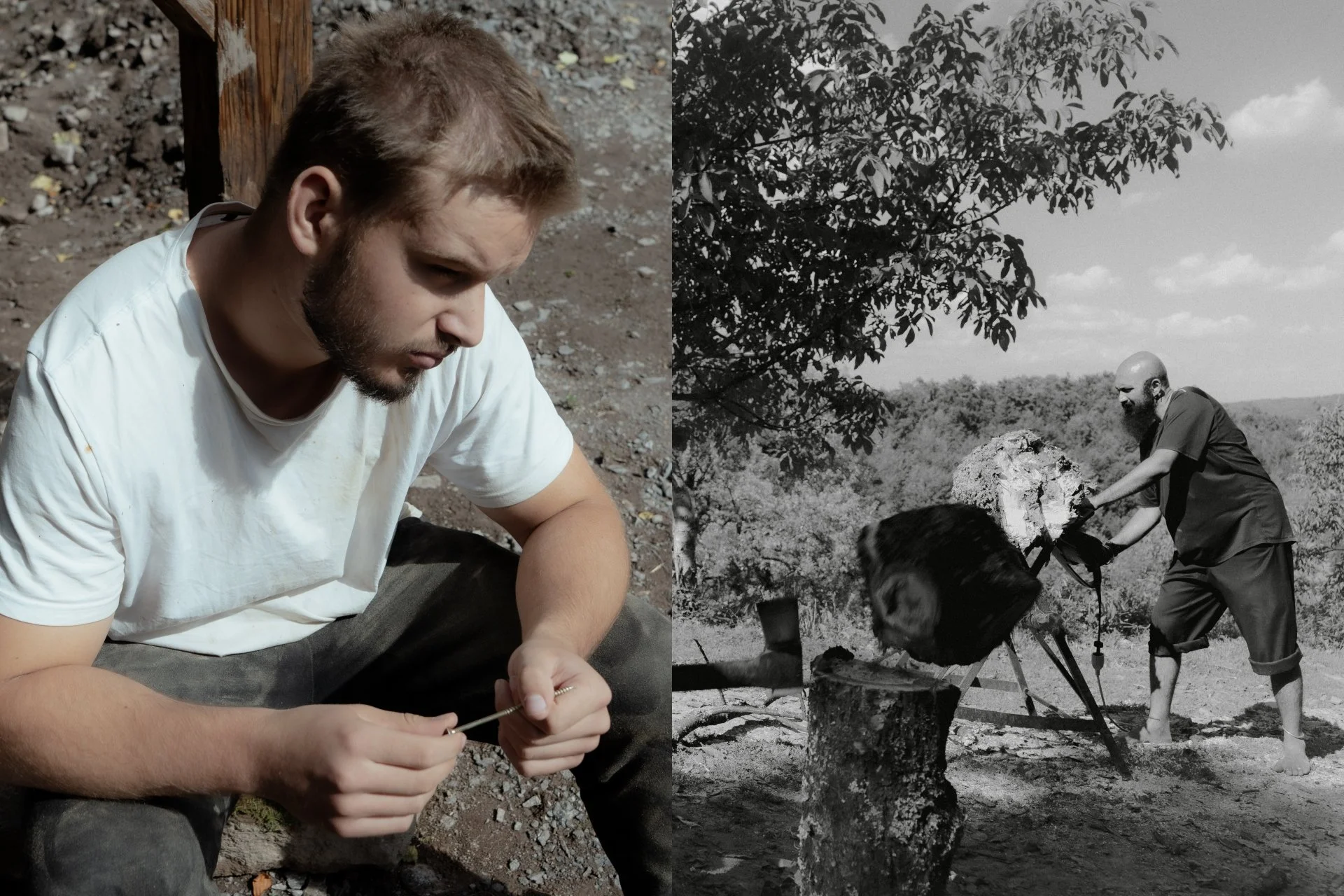
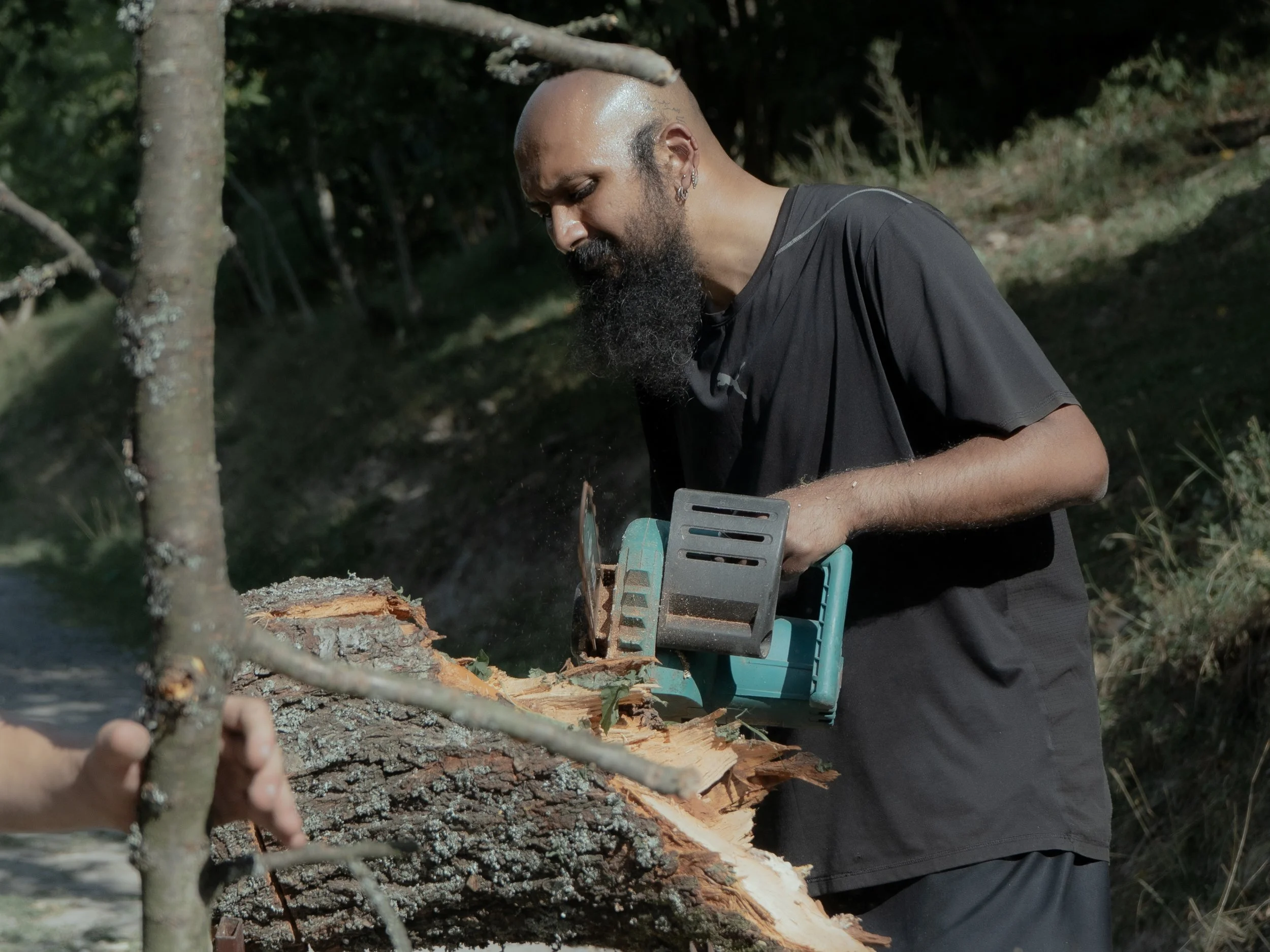
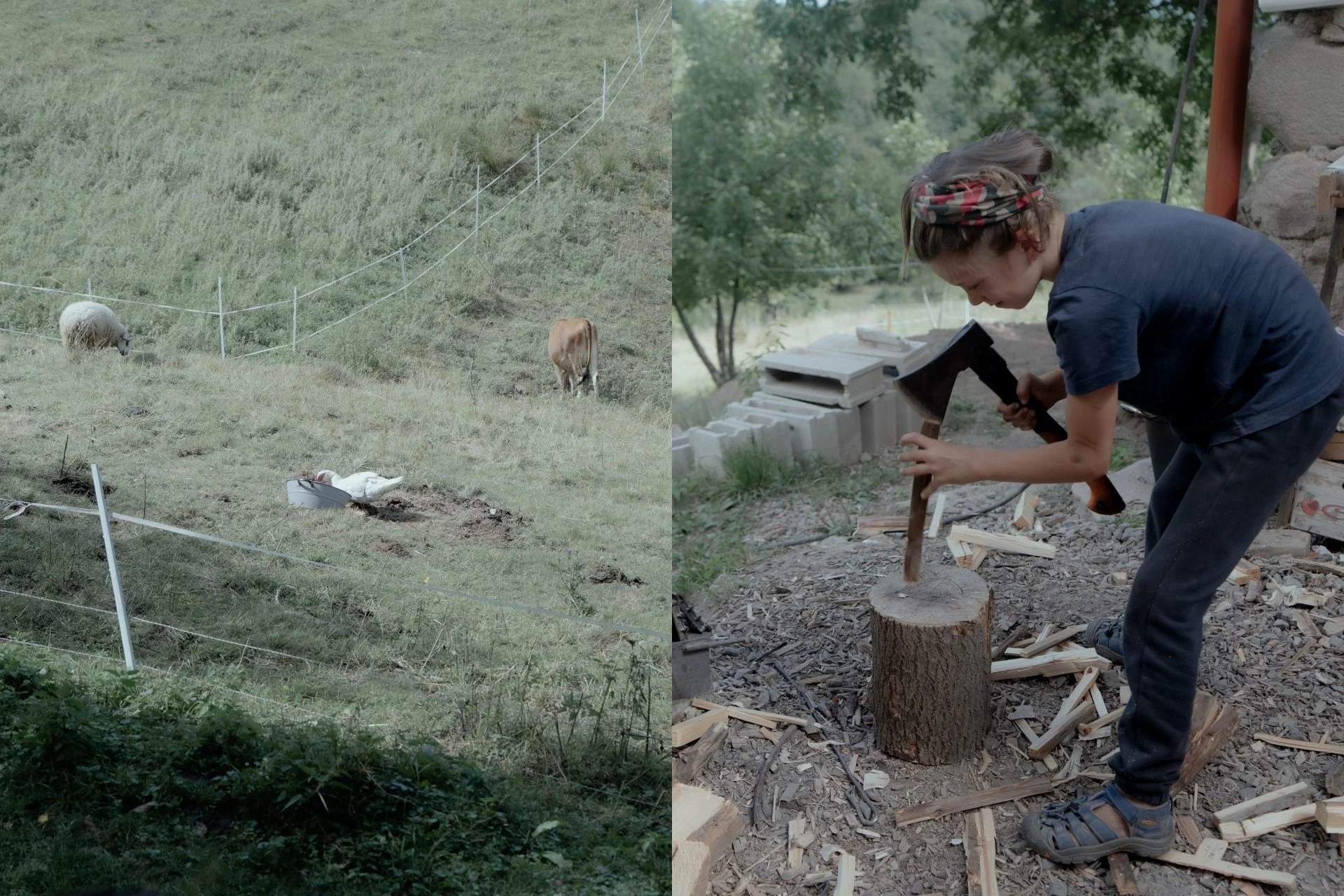
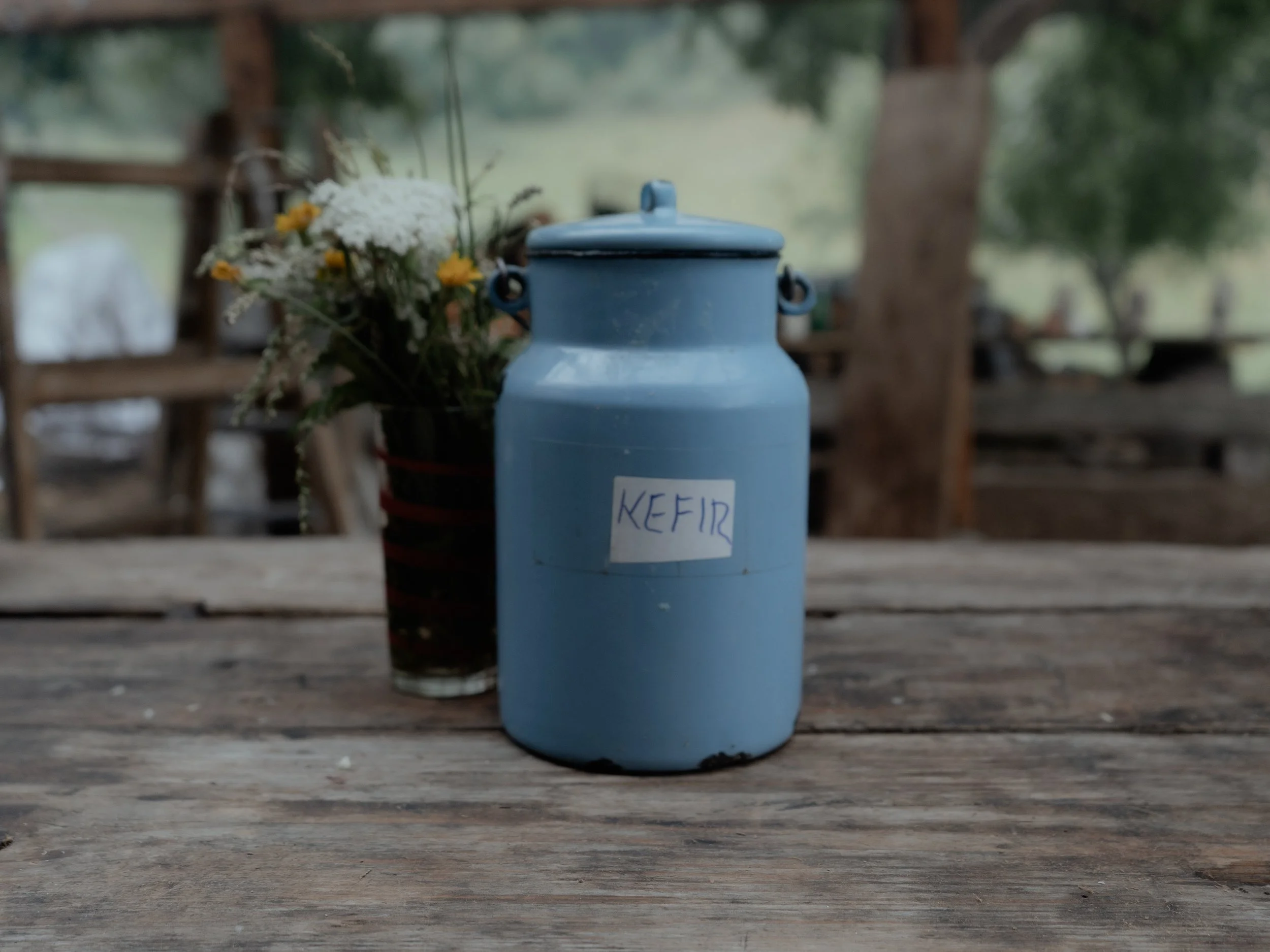
Volunteers arrive to help out throughout the year, desiring to experience life off the land. They chop wood, sand beams and haul rocks, in return for a bed in the barn attic and fresh milk products. Below the farm, a family of nomadic Slovaks has recently settled their caravans. They move easily in and out of daily farm life. Life here is spare and close to the land. Meals are cooked on a fire stove in the outdoor kitchen. The food is simple, mostly home-produced: cheese, raw milk. Sheep are slaughtered only for winter. Meat is rare.
Dolinka is unfinished and always in motion. When weather allows, each day is spent building, fixing, or inventing new ways to keep it going and growing.
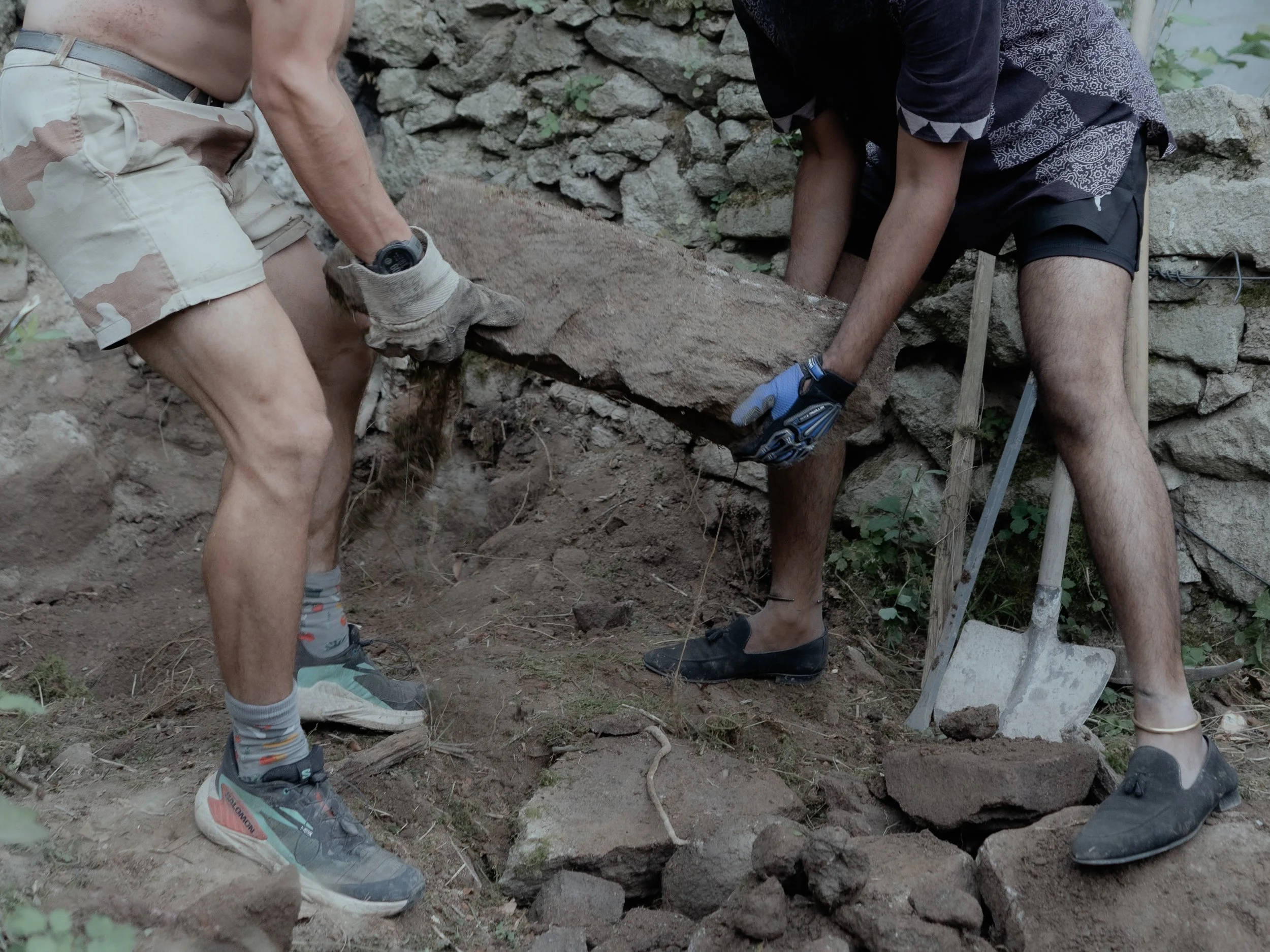
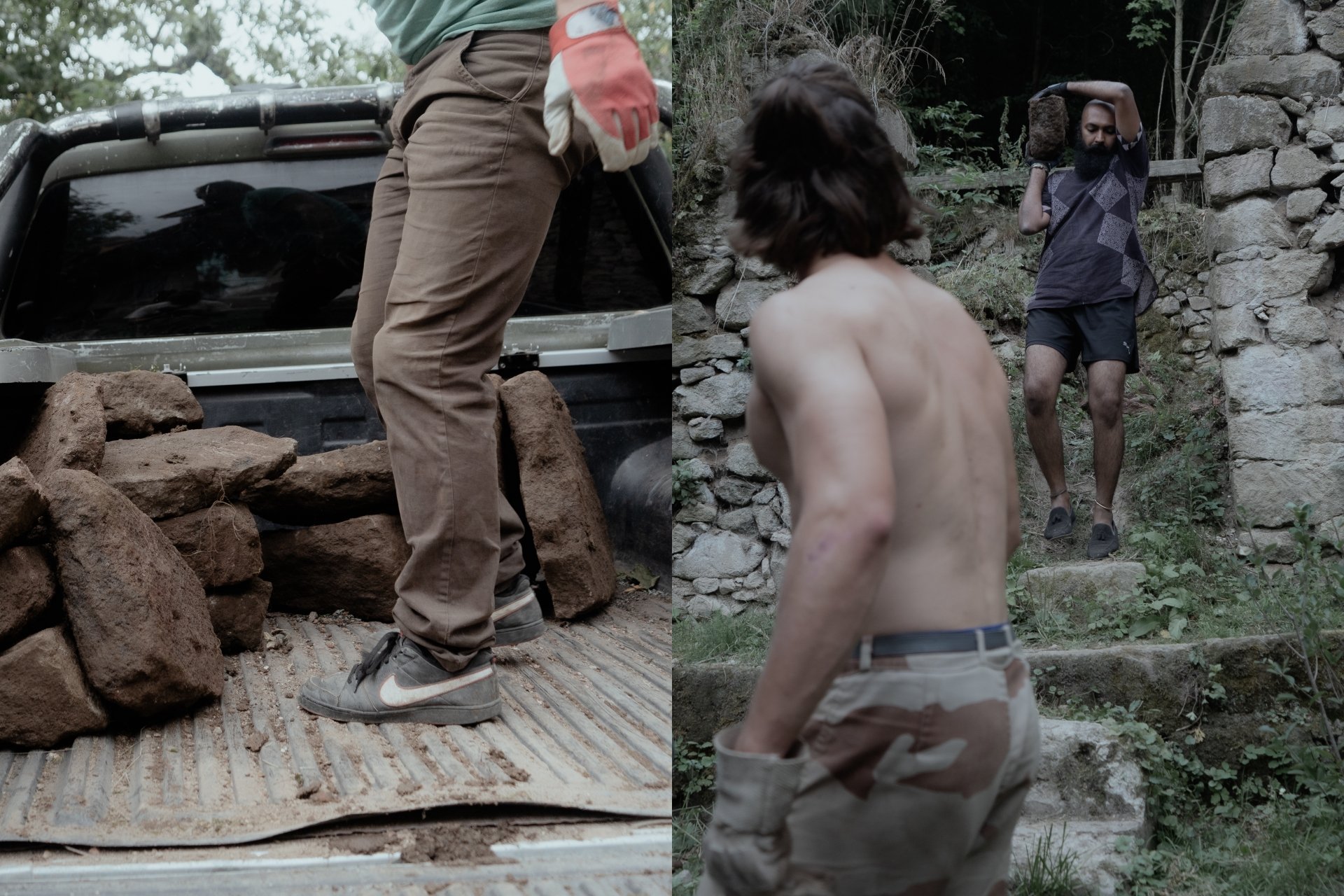
Antoine (France) and Varun (India), volunteers, hauling rocks for a new bench and vegetable terrace.
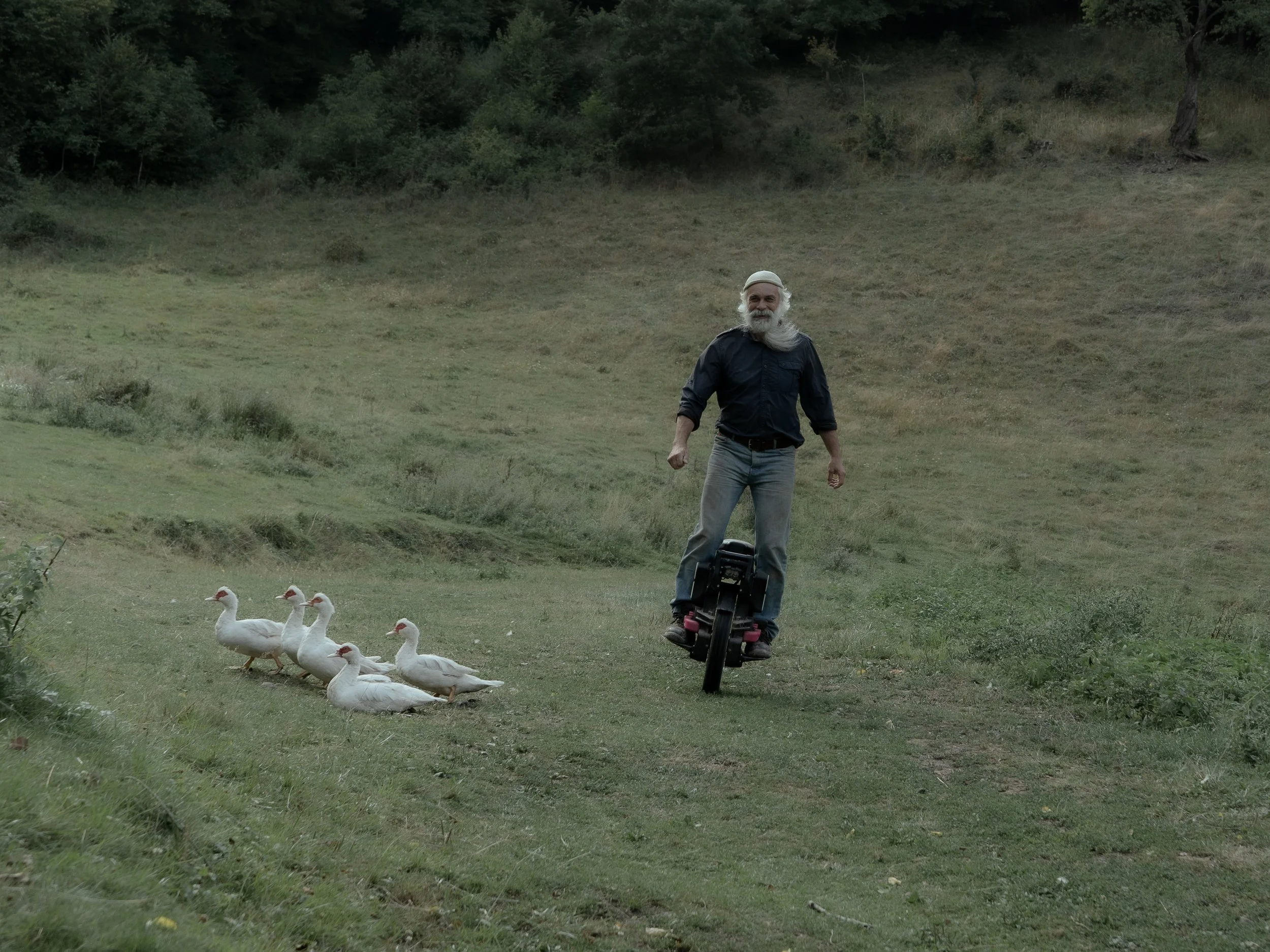
Vincent running errands on his unicycle. He is the father of the family who recently settled on the land below the farm.
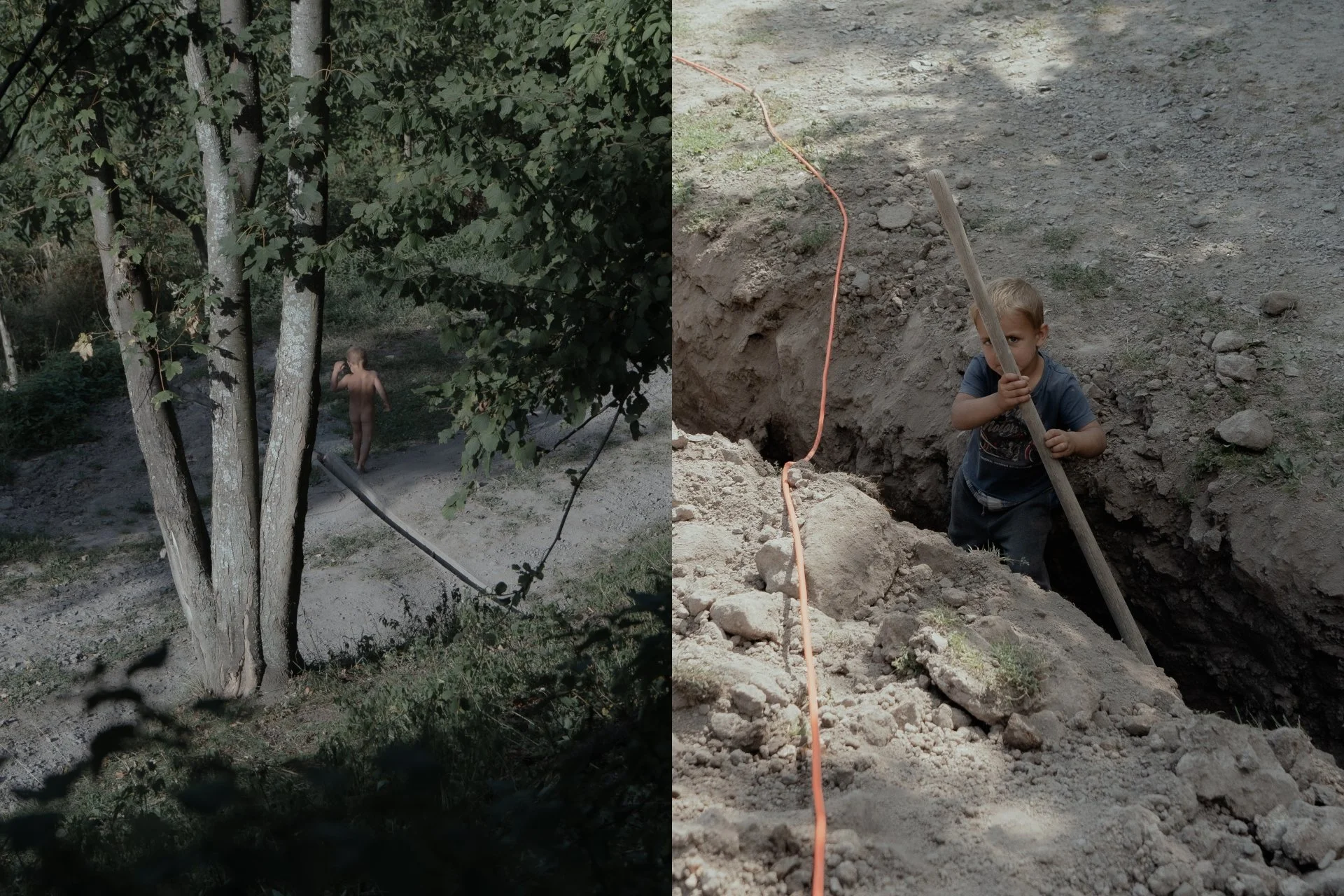
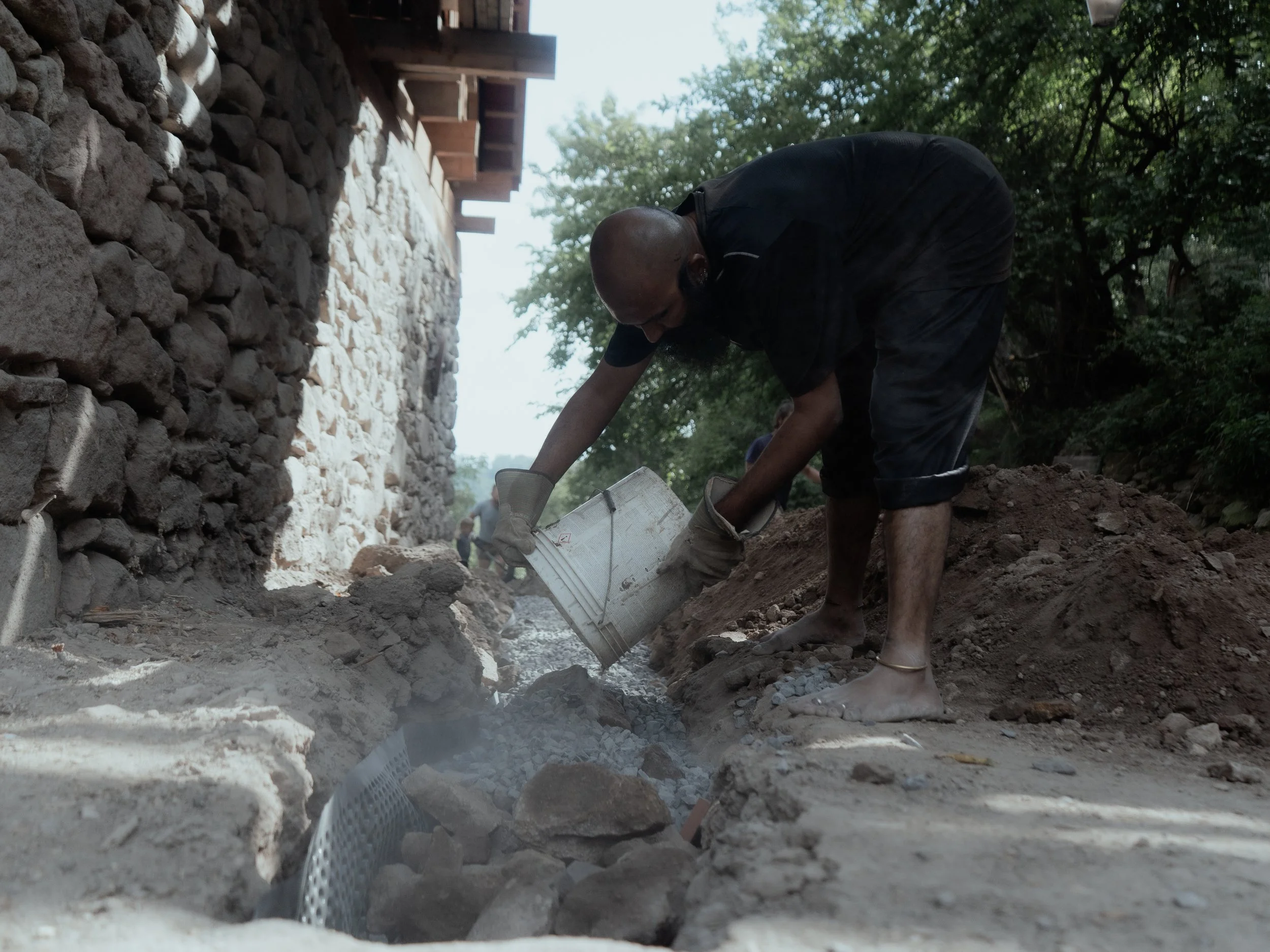
Jonas (6 years old) helping dig a new drainage channel.
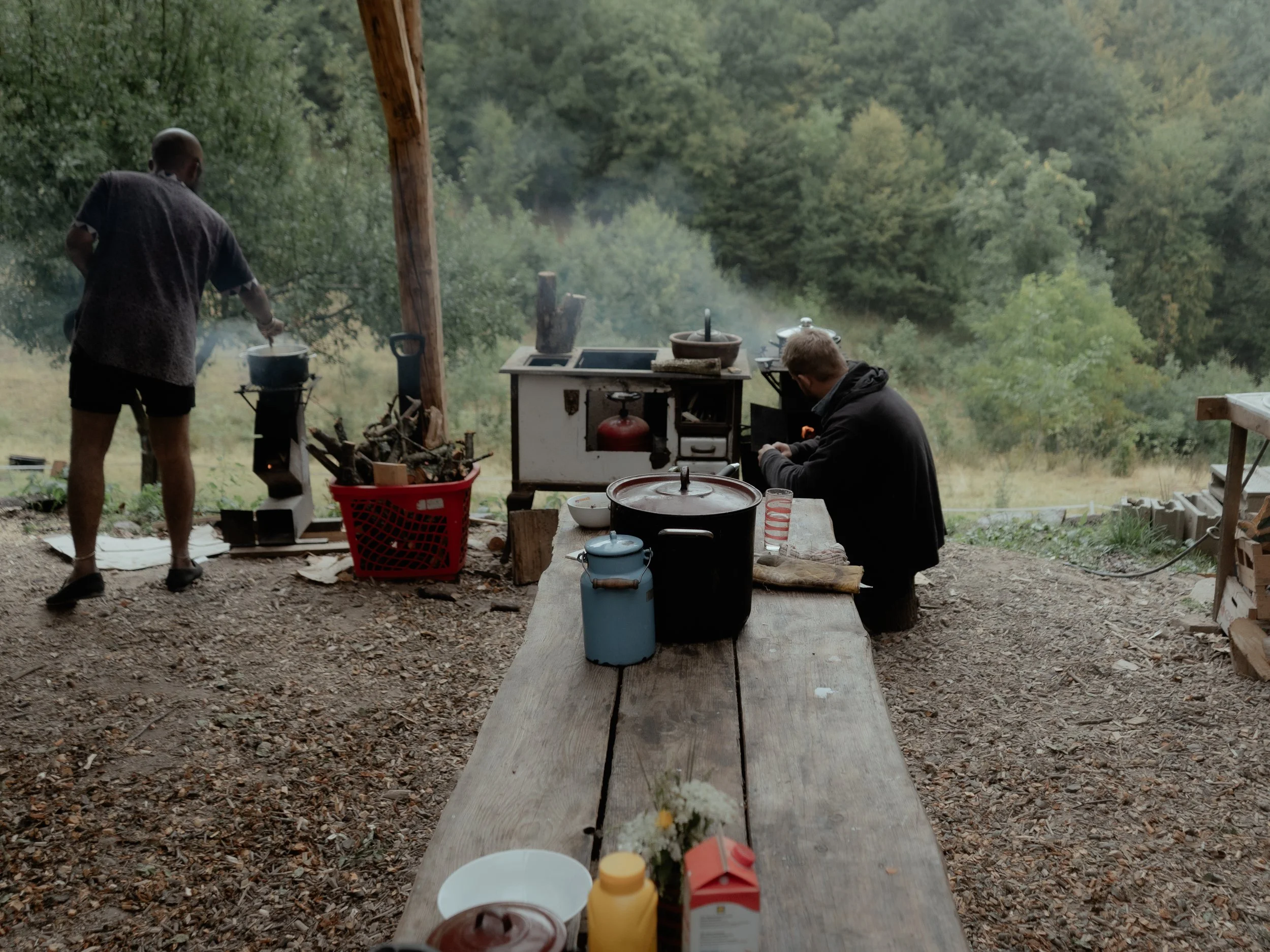
David and Varun cooking dinner in the outdoor kitchen.
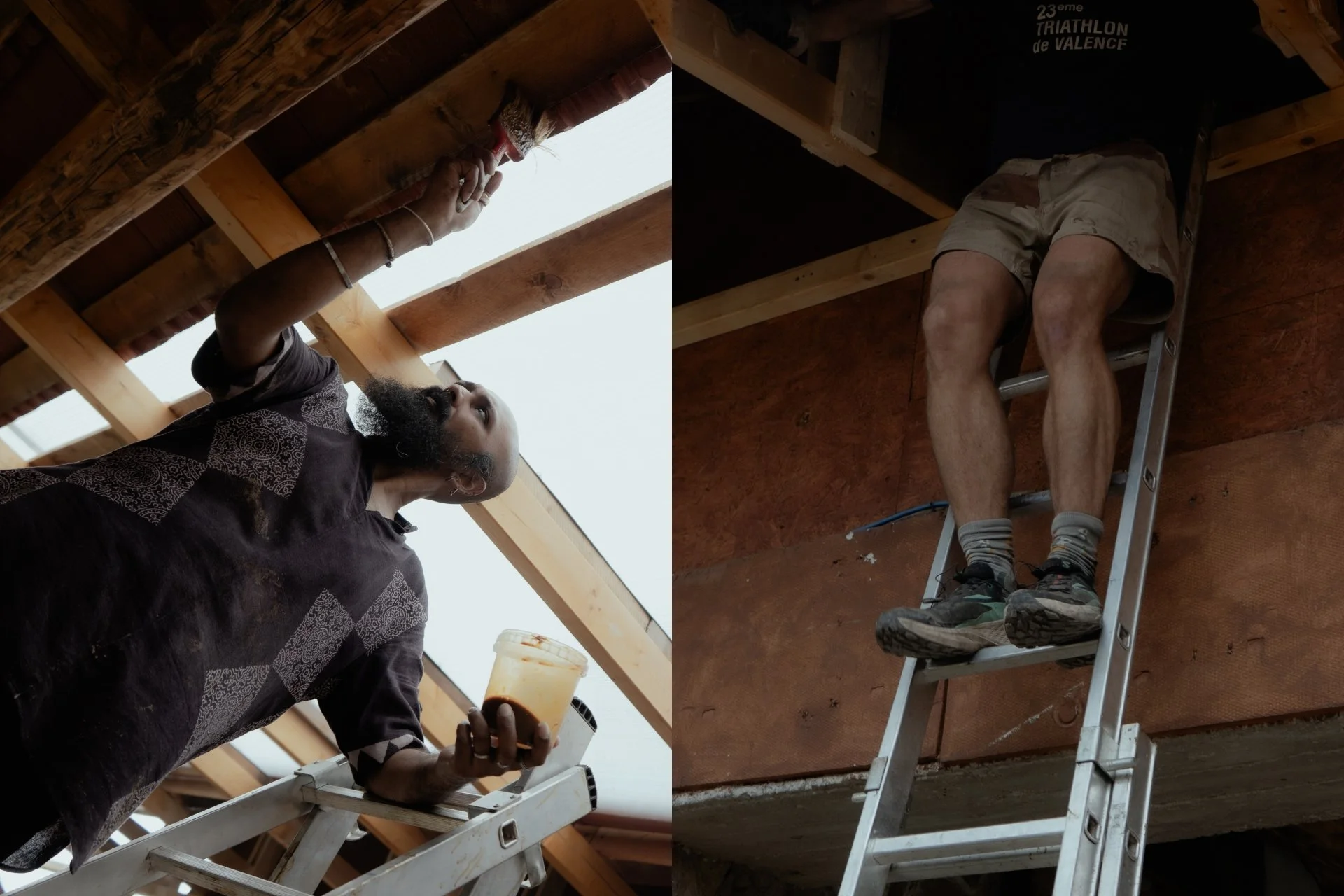
Varun and Antoine oiling the beams of the outdoor kitchen.
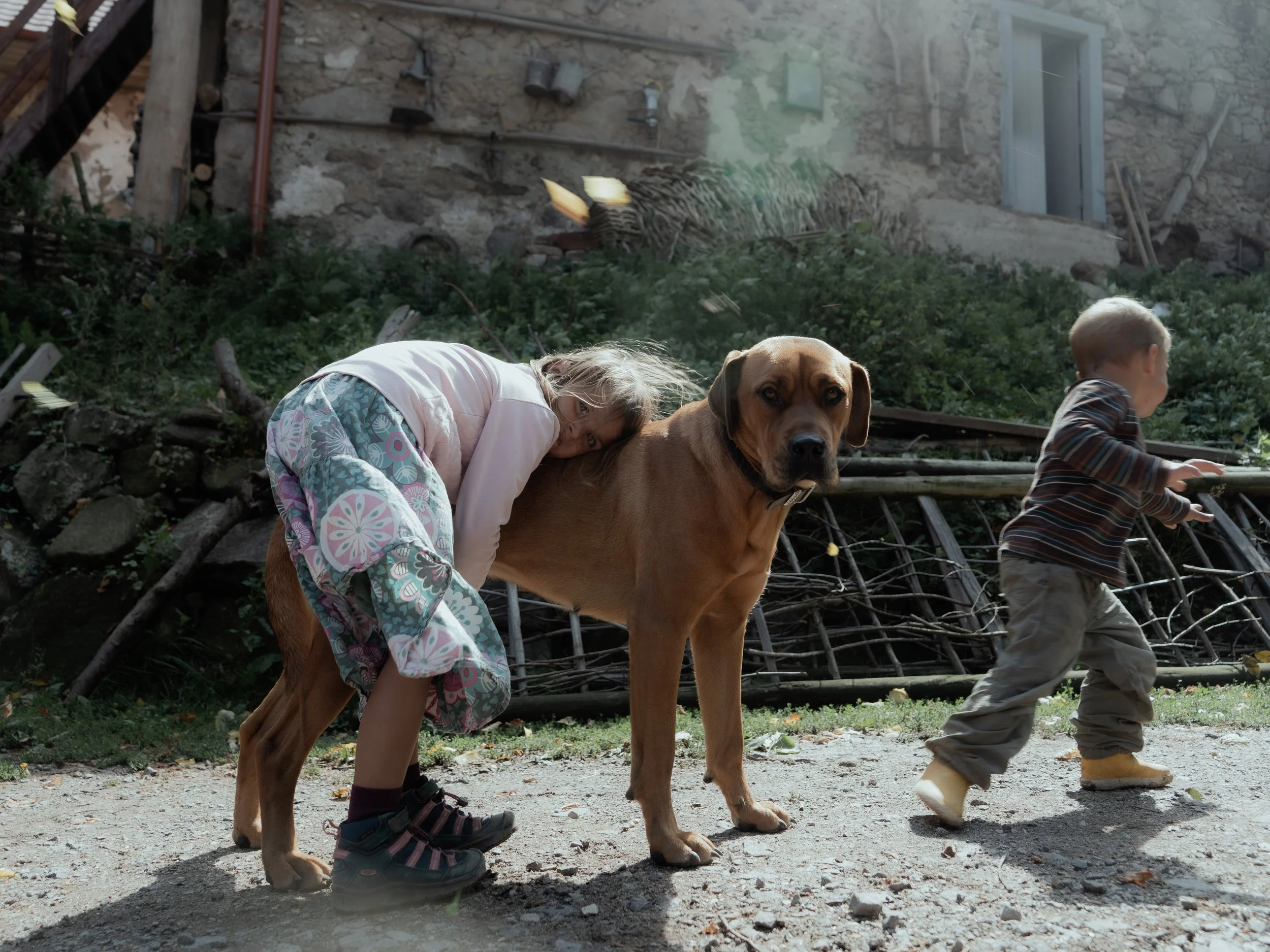
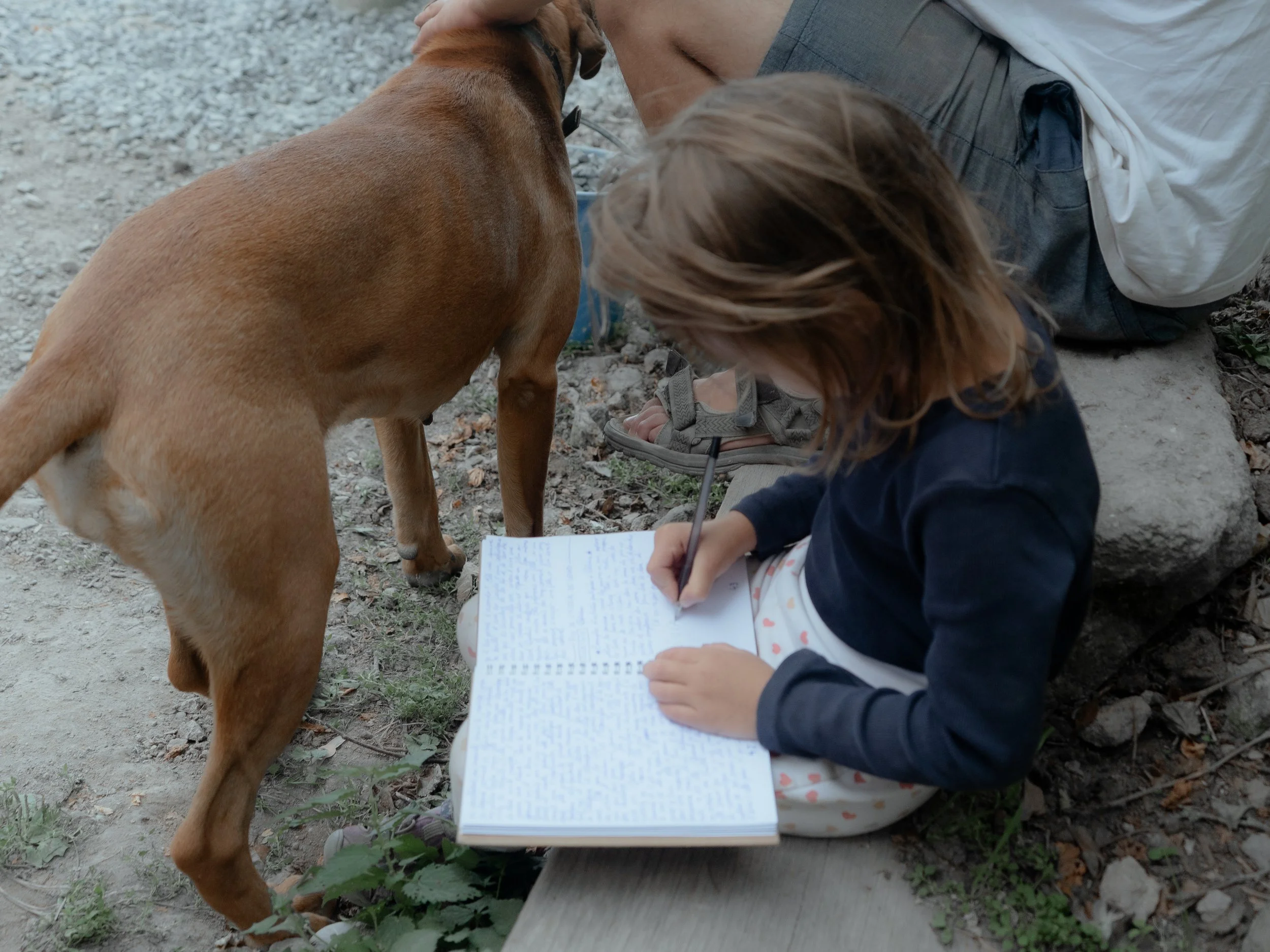
Olivia and the farm dog, Blška (flea).
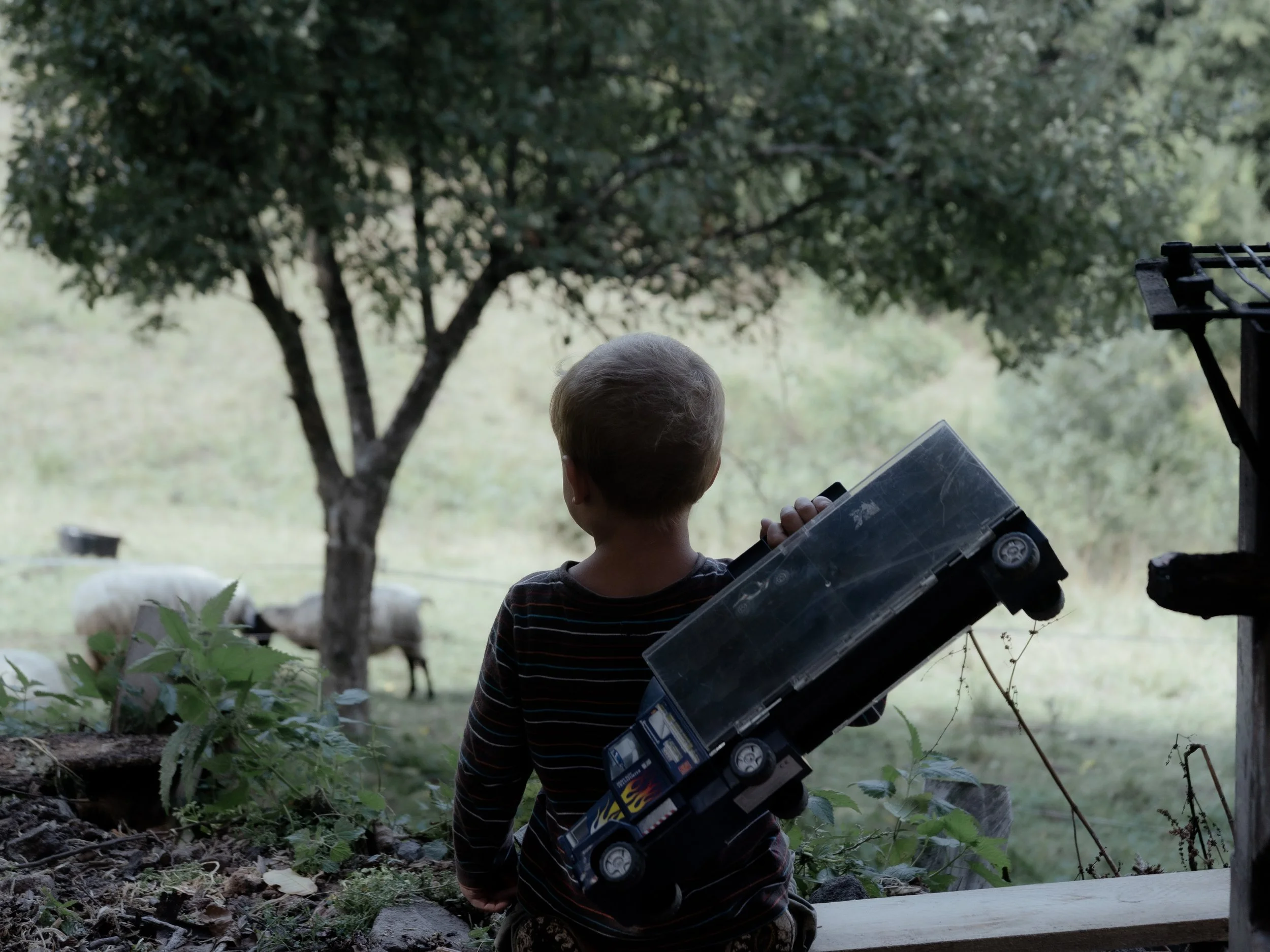
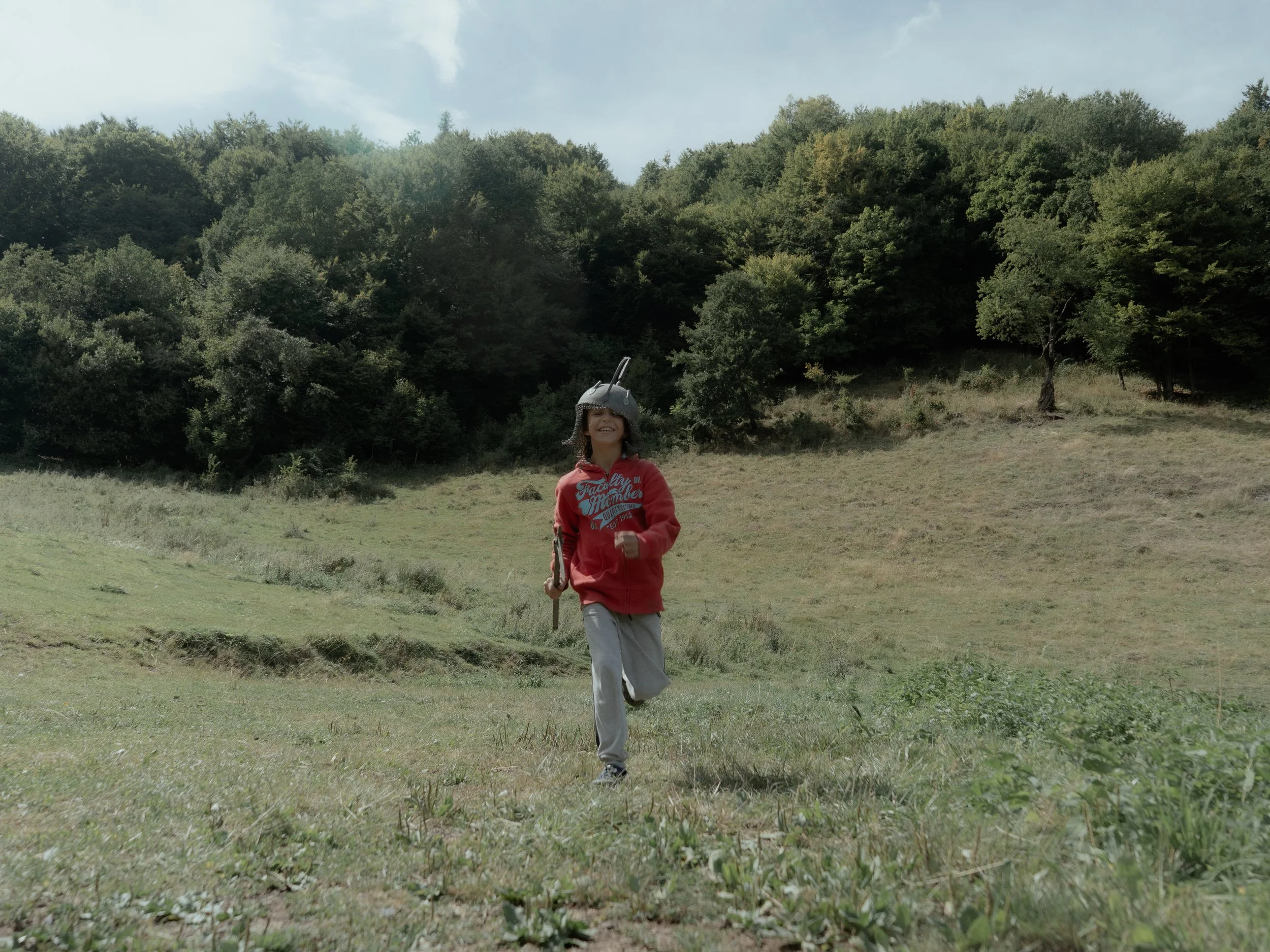
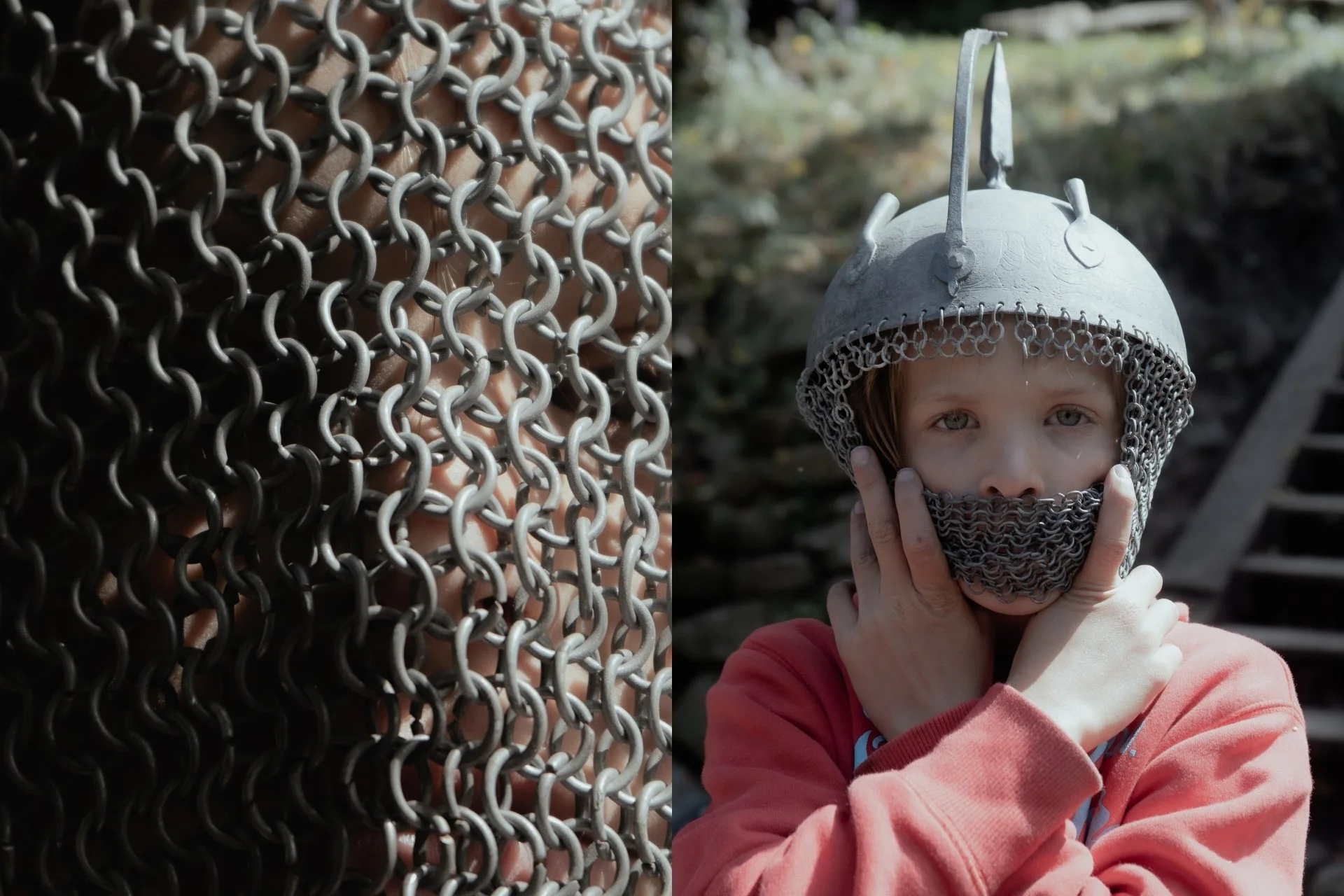
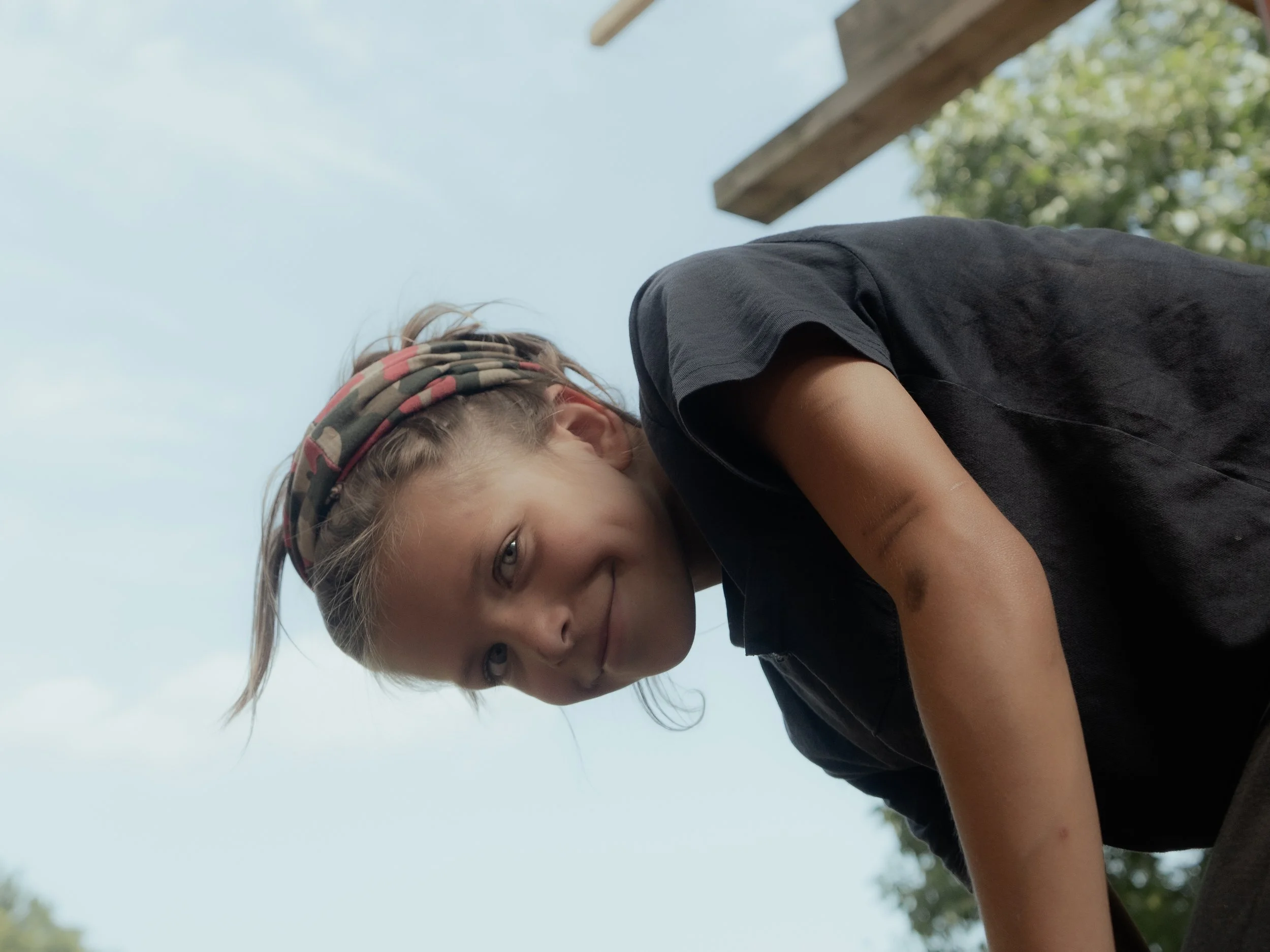
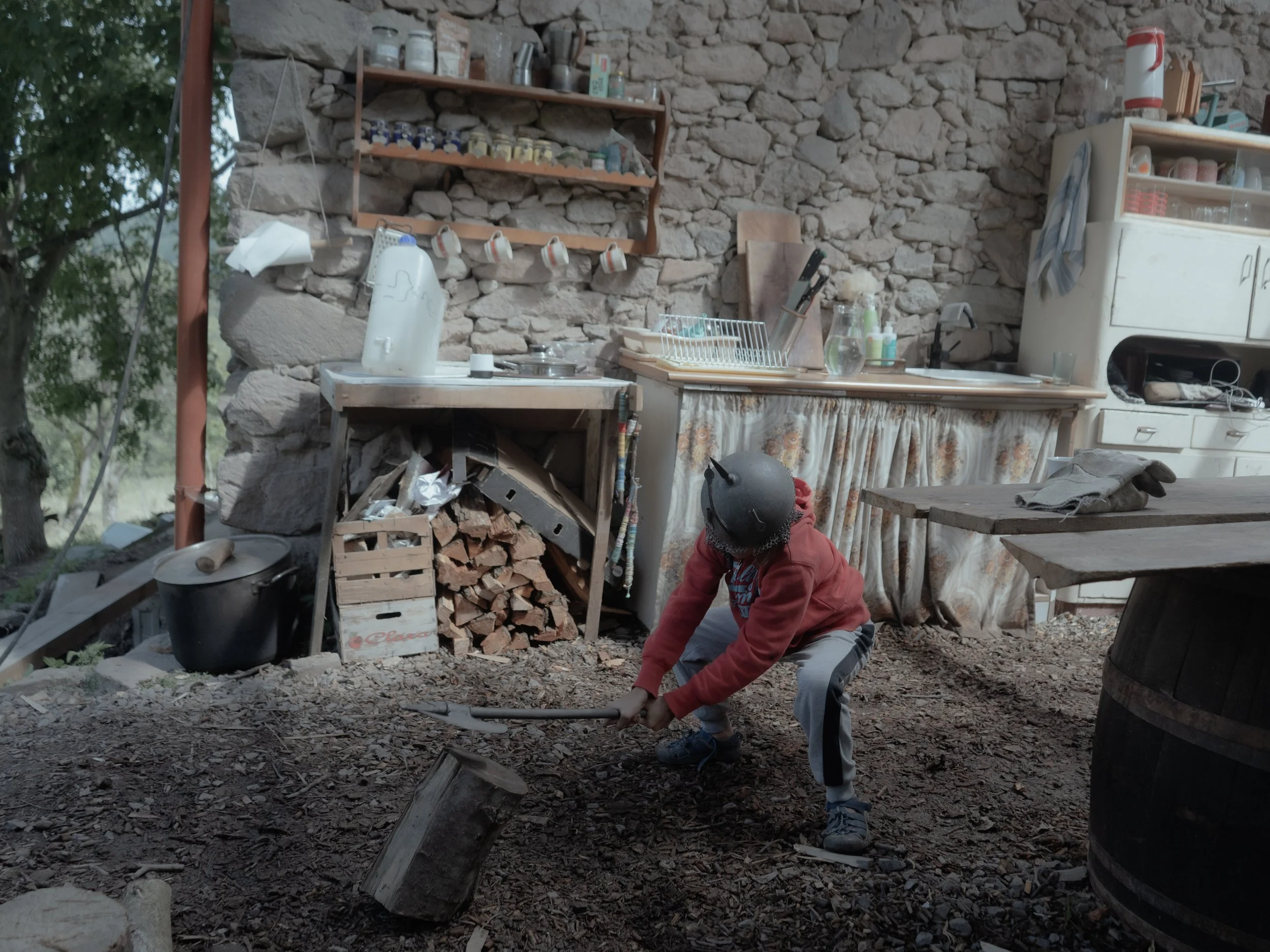
Gregor, the eldest (12 years), showing off his knight armour.
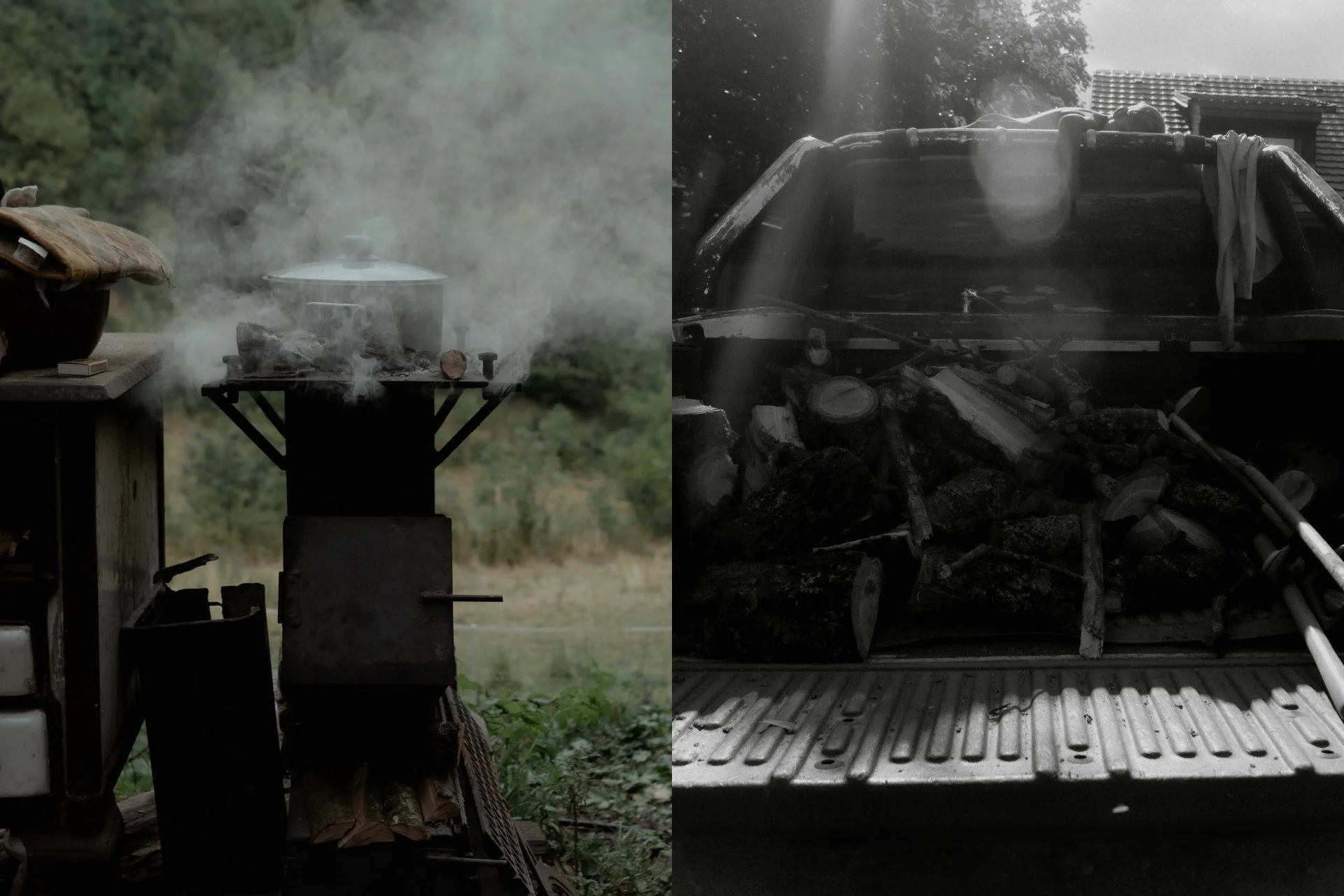
Jonáš resting atop the truck while we load wood for the winter.
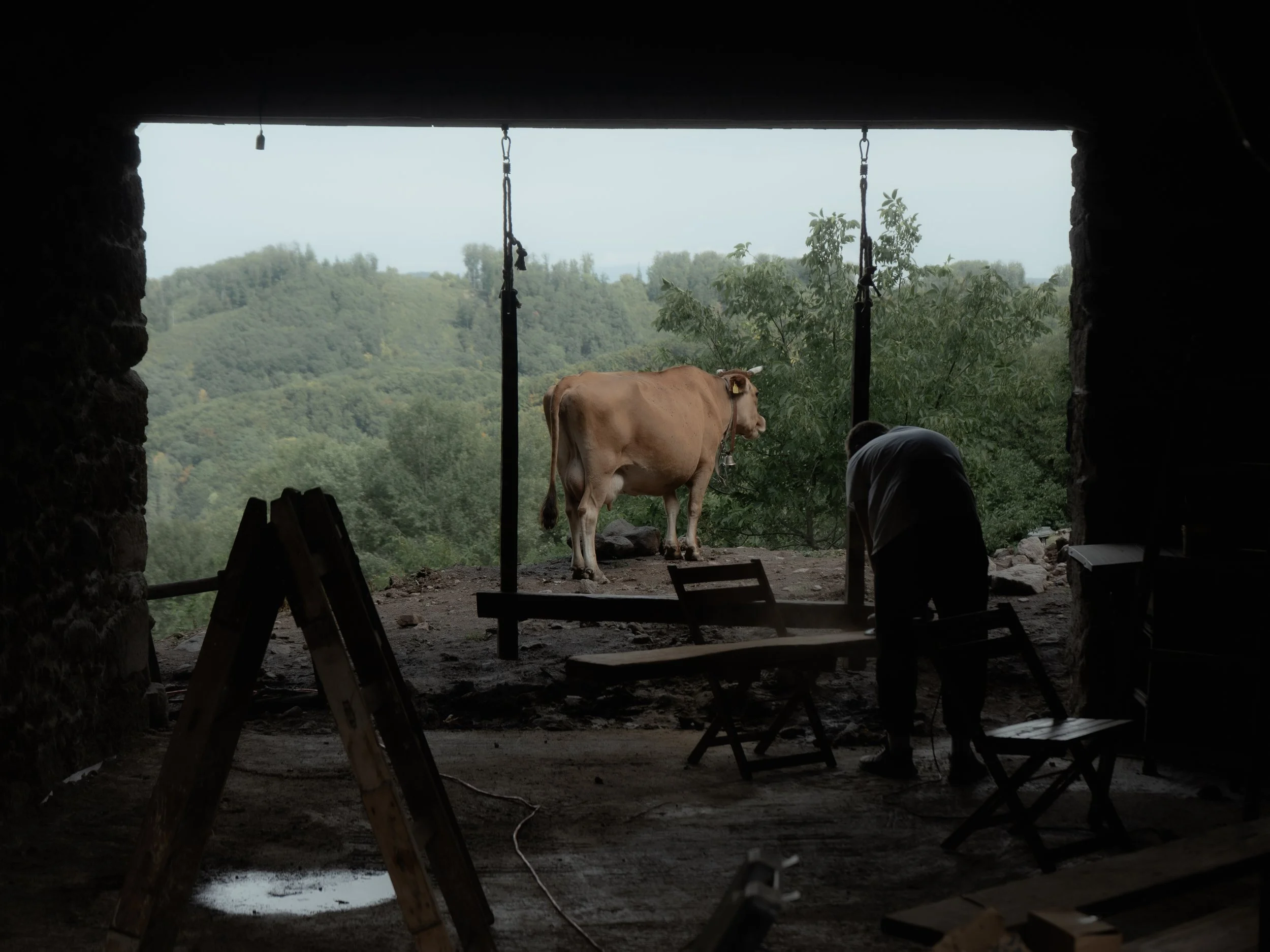
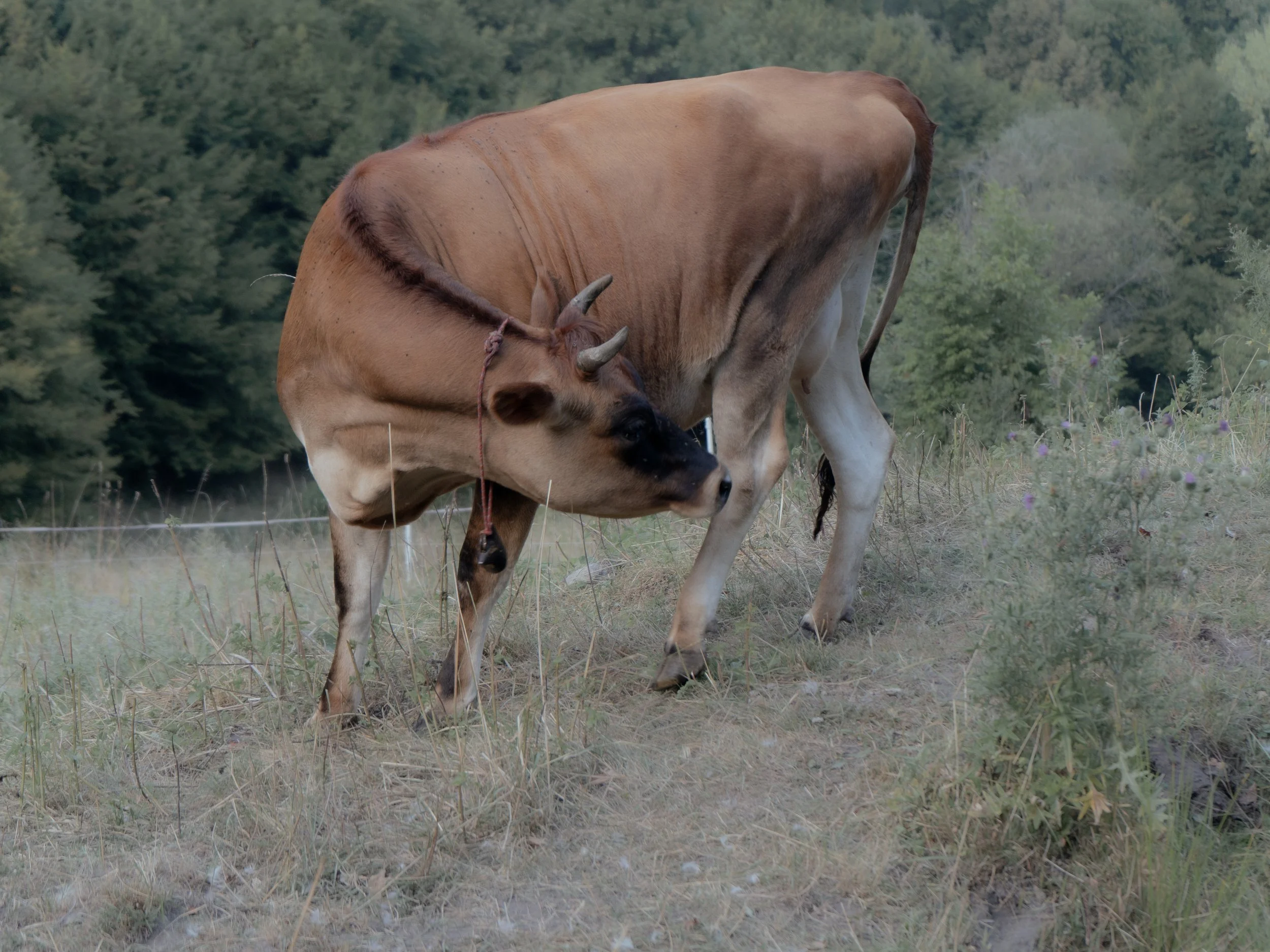
Dolinka's calf.